Direct Answer
At-home and in-clinic cognitive testing serve different purposes, and the right choice depends on your goals. At-home testing is best for screening, establishing a baseline, and monitoring trends over time. In-clinic testing provides a controlled environment, broader assessment tools, and the clinical context needed for formal diagnosis. Many people benefit from starting at home and escalating to clinic-based evaluation when results or symptoms warrant it.
- Why the Setting MattersWhat At-Home Cognitive Testing OffersWhat In-Clinic Cognitive Testing OffersSide-by-Side ComparisonWhen At-Home Testing Is the Right Starting PointWhen Clinic Testing Becomes ImportantHow the Two Settings Work TogetherCommon MisconceptionsQuestions to Ask Before ChoosingMaking At-Home Results CountTaking the Next StepFrequently asked questionsSources
Why the Setting Matters
Where you take a cognitive test affects what it can tell you. Testing conditions influence score reliability, and the type of assessment determines how deeply cognitive function is evaluated.
A quiet clinic room with a trained administrator eliminates many variables that affect home-based results. But clinic-based testing also requires scheduling, travel, and sometimes referrals or insurance authorization. At-home testing removes those barriers, making it easier to take the first step sooner.
Understanding the tradeoffs helps you make a more informed decision about where to start and when to move from one setting to the other.
What At-Home Cognitive Testing Offers
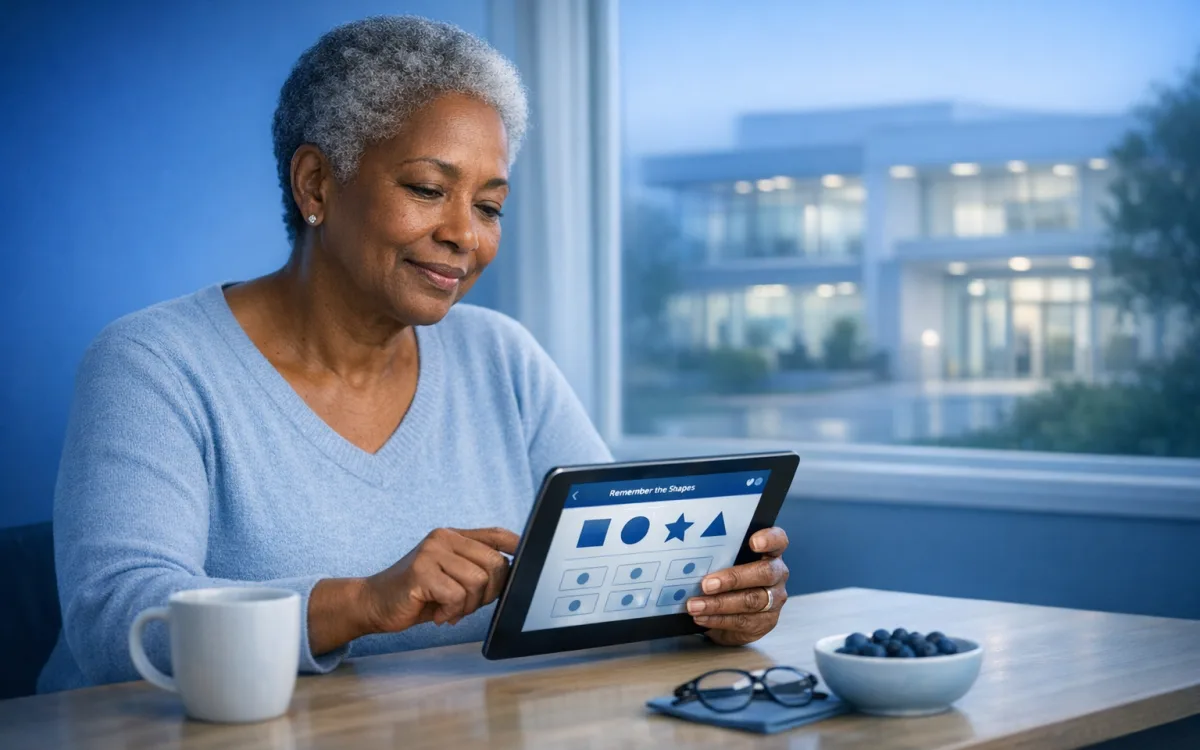
At-home cognitive testing uses standardized digital tasks to evaluate core domains like memory, attention, and processing speed. For a comprehensive overview, see our guide to at-home cognitive testing.
Key strengths of at-home testing include:
- Accessibility: No travel, appointments, or referrals needed to get started.
- Baseline creation: Useful for establishing a personal reference point while you feel well.
- Trend monitoring: Repeat testing at regular intervals reveals patterns that single-visit assessments miss.
- Lower cost: Many at-home options cost less than formal neuropsychological evaluations, which can range from several hundred to several thousand dollars (U.S. Preventive Services Task Force).
- Family involvement: Loved ones can observe the process and help track functional changes alongside scores.
At-home tools work well when the goal is proactive monitoring, early detection of change, or preparing structured information for a clinician visit.
What In-Clinic Cognitive Testing Offers
In-clinic testing typically occurs under direct supervision by a neuropsychologist, neurologist, or trained technician. The assessment can be far more comprehensive than most home-based tools.
Key strengths of in-clinic testing include:
- Controlled environment: Standardized room conditions, timing, and instructions reduce noise in results.
- Broader assessment scope: A full neuropsychological evaluation can span several hours and cover additional domains such as visuospatial function, complex reasoning, and motor planning that most home tests do not measure.
- Behavioral observation: A clinician can note response patterns, frustration, effort, and subtle signs that software cannot capture.
- Diagnostic support: Results are interpreted alongside medical history, imaging, lab work, and functional reports to inform formal diagnosis (AAN, 2018).
- Insurance coverage: Medicare and many private plans cover cognitive screening and neuropsychological evaluation when ordered by a provider.
In-clinic testing is most valuable when a formal diagnosis is needed, symptoms are progressing, or when multiple possible causes need to be distinguished.
Side-by-Side Comparison
Key differences between the two settings:
- Access: At-home begins immediately; clinic requires referrals and scheduling.
- Cost: At-home options are generally lower cost; formal evaluations can run $500 to $3,000 or more.
- Duration: At-home takes 15 to 45 minutes; clinic evaluations often run 2 to 4 hours.
- Scope: At-home covers core domains; clinic evaluations also assess visuospatial, motor, and behavioral factors.
- Repeatability: At-home is designed for regular repetition; clinic evaluations are typically done once.
- Diagnostic value: At-home supports screening and trend tracking; clinic supports formal diagnosis.
Neither setting is universally better. Each has a role depending on where you are in the process.
When At-Home Testing Is the Right Starting Point
At-home testing is often the better first step in several common situations:
- You want to establish a personal baseline before any symptoms appear.
- You have noticed subtle changes but are not sure whether they are meaningful.
- You want structured data to bring to a clinician conversation rather than just describing symptoms from memory.
- Travel or mobility limitations make clinic visits difficult.
- You are monitoring someone who resists formal evaluation but may try whether you can take a cognitive test online.
Unsupervised digital cognitive testing can serve as a useful screening layer, particularly when results are interpreted as trend data rather than standalone diagnostics (National Institute on Aging).
When Clinic Testing Becomes Important
Certain situations call for the controlled environment and diagnostic depth of a clinical setting:
- At-home scores show a persistent downward trend across multiple sessions.
- Daily function has changed noticeably, including medication management, finances, or navigation.
- A clinician recommends formal evaluation based on history and screening results.
- Multiple possible causes need to be distinguished, such as depression, medication effects, or early neurodegeneration.
- Legal, occupational, or disability documentation requires a formal neuropsychological report.
The American Academy of Neurology recommends formal evaluation when screening raises concern and functional impact is reported by the patient or an informant (AAN, 2018).
How the Two Settings Work Together
At-home and in-clinic testing are not competing options. They work best as complementary layers in a care pathway.
A practical sequence many families follow:
- Start at home: Establish a baseline and test at regular intervals.
- Track trends: Compare results over months, noting any persistent changes alongside daily function observations.
- Share with a clinician: Bring trend data and functional notes to a primary care or specialist visit.
- Escalate when warranted: If screening trends or symptoms indicate the need for deeper evaluation, proceed with formal in-clinic testing.
This layered approach catches changes earlier without requiring expensive or time-consuming evaluations for everyone. Digital testing in ambulatory settings can complement traditional evaluation when used within defined clinical pathways (Alzheimer's Association).
Common Misconceptions
Several misunderstandings can lead to poor decision-making about where to test:
- "At-home tests are not real tests." Some home-based tools use validated, standardized methods. The key is to evaluate whether a given product meets clinical standards. For guidance, review what makes a cognitive test FDA cleared.
- "If the clinic test is normal, I never need to retest." Cognitive health is dynamic. A normal result today does not eliminate future risk, especially if risk factors are present.
- "At-home testing can replace a doctor visit." It cannot. At-home results are most useful when they inform clinical conversations, not replace them.
- "Clinic testing is only for people with dementia." Clinic-based evaluation is also used for mild cognitive impairment, post-concussion assessment, medication effects, and baseline purposes.
Questions to Ask Before Choosing
Before deciding, consider:
- What is my goal? Screening favors at-home; diagnosis favors clinic.
- How urgent is my concern? Gradual changes can start with home testing; rapid changes should go directly to clinical evaluation.
- What resources are available? Factor in cost, insurance, travel ability, and wait times.
- Do I have existing trend data? Home monitoring results can help a clinician decide whether formal testing is needed.
Making At-Home Results Count
If you start with at-home testing, a few practices improve the value of your data:
- Test at consistent times under similar conditions.
- Record brief notes about sleep, stress, and health alongside each session.
- Track real-world function, such as whether conversations, appointments, or tasks feel harder.
- Share results with a clinician at your next visit, even if they are reassuring.
Treating at-home testing as part of a system rather than a one-time event improves both the accuracy of at-home cognitive tests and the quality of any follow-up clinical discussions.
Taking the Next Step
For a deeper look at how at-home options are structured and what to look for in a quality tool, explore this overview of at-home cognitive testing.
If you are ready to start with a clinically validated at-home assessment, see how Orena works.
Frequently asked questions
Is at-home cognitive testing as accurate as in-clinic testing?
Can I skip clinic testing if my at-home results are normal?
Which type of cognitive testing does Medicare cover?
When should I choose in-clinic testing over at-home?
Sources
- Medical Tests for Diagnosing Alzheimer's — Alzheimer's Association, 2024
- Practice guideline update: Mild cognitive impairment — American Academy of Neurology, 2018
- Assessing Cognitive Impairment in Older Patients — National Institute on Aging, 2023
- Screening for Cognitive Impairment in Older Adults — U.S. Preventive Services Task Force, 2020
Medical disclaimer. This article is for general educational purposes and is not a substitute for professional medical or insurance advice. Orena does not diagnose Alzheimer’s or dementia from a test alone. Always consult your doctor about your specific situation.