Direct Answer
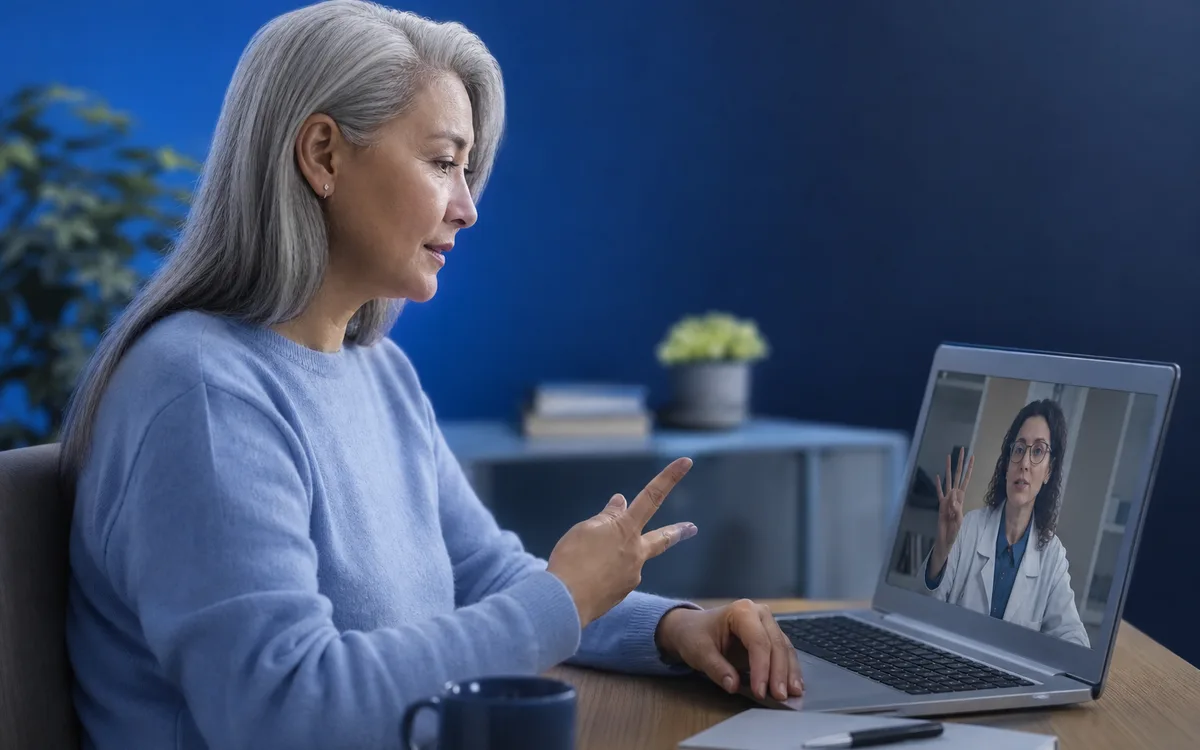
A telehealth cognitive assessment is a screening or evaluation of thinking and memory that a trained clinician conducts remotely, usually over secure video and sometimes by telephone. The clinician guides you through standardized tasks, records how you respond, and interprets the result — it is not a quiz you score yourself. Research on remote testing in older adults finds broadly good support for this approach, especially for verbally based tasks, though it works best as one step within a fuller evaluation rather than a stand-alone diagnosis (Marra et al., 2020).
Why It Matters
Getting to a clinic for cognitive testing is not always simple. Distance, transportation, mobility issues, caregiver schedules, and long waits for specialists all get in the way — and those barriers often fall hardest on the older adults who most need timely assessment. Telehealth removes some of that friction by bringing a clinician to your kitchen table through a screen.
It also fits a wider shift toward home-based brain health. If you are weighing your options, our overview of at-home cognitive testing explains how remote and self-directed tools fit alongside traditional clinic visits.
How a Telehealth Cognitive Assessment Works
The format is closer to a normal video appointment than to an online form. A typical visit includes a few common elements:
- A quiet, private setup. You join a secure video call on a computer, tablet, or phone, ideally in a well-lit room without distractions.
- Clinician-led tasks. The professional walks you through short exercises that sample memory, attention, language, and reasoning.
- Real-time observation. The clinician watches how you work through each task, not only whether you get the "right" answer.
- Interpretation in context. Your responses are scored and weighed against your history, medications, mood, and other health factors.
Because a professional is administering and scoring the assessment, the experience differs from a free web quiz. For a closer look at that distinction, see our guide to taking a cognitive test online.
What the Research Shows
The evidence for remote cognitive testing is more established than many people expect. A meta-analysis of videoconference administration found that verbally mediated tasks — such as digit span, verbal fluency, and list learning — were not meaningfully affected by being delivered over video compared with in person (Brearly et al., 2017). A later systematic review focused on older adults reached a similar bottom line, reporting good overall support for teleneuropsychology assessments, including for widely used cognitive screeners (Marra et al., 2020).
That is encouraging, but it comes with conditions. The same research notes that equivalence is strongest for verbal tasks and for people with reliable, higher-speed connections, and that motor-dependent tasks are harder to interpret remotely.
Where Telehealth Falls Short
Remote testing is not a perfect substitute for an in-person visit, and reputable clinicians are candid about the gaps. Professional guidance for teleneuropsychology highlights several limits: video makes it harder to observe subtle behavior the way an examiner can in the room, tasks that require handling physical objects or fine motor control do not translate cleanly to a screen, and many computerized or web-based tests have not undergone the same normative and validation studies as conventional in-person measures (Bilder et al., 2020).
Access is another real constraint. Telehealth depends on a device, a stable connection, and enough comfort with the technology to focus on the tasks rather than the tools — and that same guidance notes these requirements can deepen existing disparities in care (Bilder et al., 2020). Hearing or vision difficulties can add further hurdles. When a detailed battery is needed, an in-person full neuropsychological evaluation may still be the better route.
When to Consider It
A telehealth cognitive assessment can be a sensible starting point in several situations:
- You have noticed memory or thinking changes and want a professional check without a long trip.
- A specialist is far away or booked out for months.
- You are following up on an earlier result and mainly need verbal and memory tasks.
- Travel or mobility makes an in-clinic visit difficult.
It is a weaker fit when the clinical question calls for extensive motor or visuospatial testing, when technology access is limited, or when a comprehensive in-person battery is warranted. Comparing the two settings directly can help — see at-home versus clinic testing for a side-by-side view.
Does Medicare Cover It?
For many older adults, cost is a deciding factor. Medicare Part B covers certain telehealth services, and cognitive assessments appear among the listed examples; through the end of 2027, Medicare covers telehealth you receive from anywhere in the country, including your home (Medicare.gov). Standard cost sharing generally applies, meaning you typically pay 20 percent of the Medicare-approved amount after your Part B deductible. Coverage details vary by plan and can change, so confirm specifics with your clinician and plan before scheduling.
What Happens Next
Whatever the setting, a screening result is a starting point, not a verdict. As the Alzheimer's Association explains, there is no single test that can determine whether someone has Alzheimer's or another dementia; a diagnosis combines cognitive testing with medical history, physical and neurological exams, and sometimes brain imaging or lab work (Alzheimer's Association). If a telehealth assessment raises a question, the next step is usually a conversation about further evaluation — not alarm. Many causes of cognitive change are treatable, and a clinician can help sort out what is driving a result.
Taking the Next Step
If you are curious whether a well-known screener can be delivered remotely, read our explainer on taking the MoCA online.
If you would like a clinically validated assessment you can complete from home and share with your doctor, learn how Orena's at-home test works.
Frequently asked questions
What is a telehealth cognitive assessment?
Is a cognitive assessment by video as accurate as in person?
Can a telehealth visit diagnose dementia?
Does Medicare cover telehealth cognitive assessments?
When is an in-person cognitive evaluation better than telehealth?
Sources
- Validity of Teleneuropsychology for Older Adults in Response to COVID-19: A Systematic and Critical Review — The Clinical Neuropsychologist, 2020
- Neuropsychological Test Administration by Videoconference: A Systematic Review and Meta-Analysis — Neuropsychology Review, 2017
- InterOrganizational Practice Committee Recommendations/Guidance for Teleneuropsychology (TeleNP) in Response to the COVID-19 Pandemic — The Clinical Neuropsychologist, 2020
- Medical Tests for Diagnosing Alzheimer's — Alzheimer's Association, 2024
- Telehealth — Medicare.gov, 2026
Medical disclaimer. This article is for general educational purposes and is not a substitute for professional medical or insurance advice. Orena does not diagnose Alzheimer’s or dementia from a test alone. Always consult your doctor about your specific situation.